
 DmWin blog
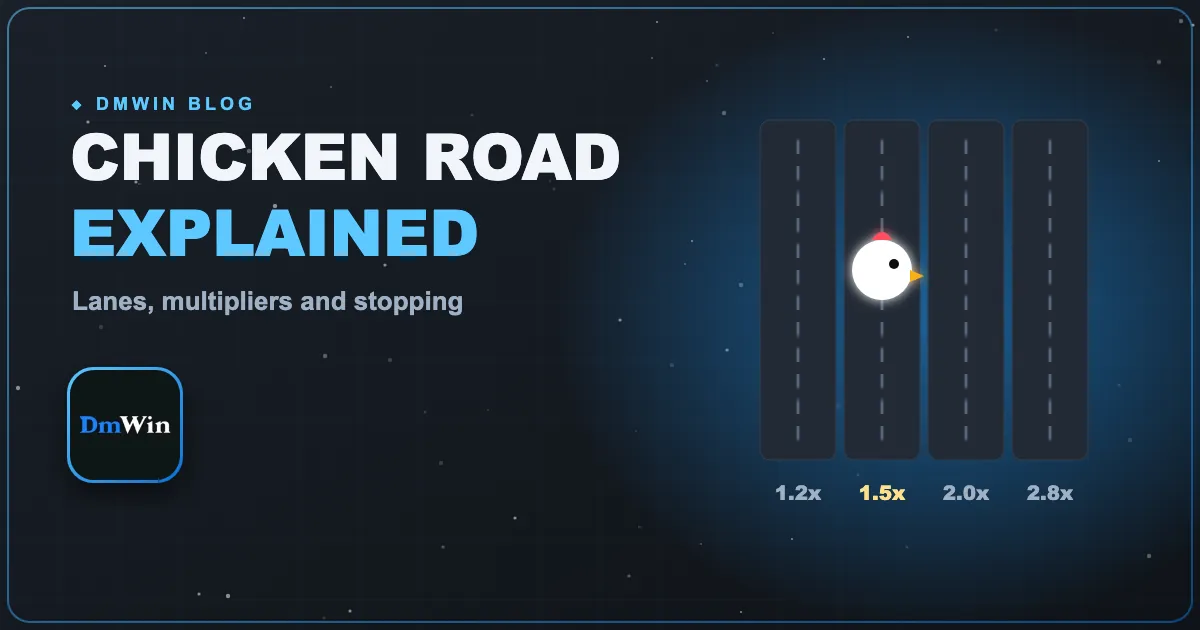
Chicken Road is one of the newer originals on DmWin, and it’s surprisingly tense for a game about a cartoon chicken. Here’s how it works and how to play it with a clear head.
How a round works
- Set your stake and difficulty.
- Tap to move the chicken across the first lane.
- Each safe crossing raises the multiplier.
- Cash out after any lane — or keep going.
- Get hit and the round ends with the stake lost.
What difficulty changes
| Easy | Small multiplier steps, lower risk each lane |
|---|---|
| Medium | Balanced |
| Hard | Big jumps, much higher risk each lane |
| Hardcore | Huge jumps, very high risk |
A simple stop rule
Pick a lane number before the round — say lane 3 on Easy — and cash out there every time, win or lose streak.
Myths to ignore
- “After a crash, the next round is safer.” — No.
- “Cars follow a pattern.” — No.
- “Predictor bots know the safe lanes.” — Scam.
Budgeting for Chicken Road
Rounds are fast, so budget by rounds: ₹200 at ₹5 per round is forty attempts. When they’re used, stop — regardless of whether the last round ended at lane 1 or lane 8.
Chicken Road vs Aviator
| Decision | Chicken Road: step by step · Aviator: one continuous climb |
|---|---|
| Control | Chicken Road: you move · Aviator: it moves |
| Auto option | Aviator has auto cash-out; Chicken Road relies on your stop lane |
More originals: Aviator, Mines & Chicken Road. Home: DmWin.
Frequently asked questions
What’s the goal in Chicken Road?
Cross as many lanes as you like; each lane raises the multiplier. Cash out before you’re hit.
What does difficulty change?
Higher difficulty means bigger multiplier jumps but a higher chance of being hit each lane.
Is there a safe lane pattern?
No. Each lane is random.